
Signs Your Home Needs Renovation
Introduction: Why recognizing early problems matters
Homeownership comes with routine upkeep and occasional surprises. Knowing the common signs your home needs renovation gives you a real advantage: you can stop small problems from growing into expensive emergencies. Riley Riley Construction helps homeowners recognize early signs that a renovation is needed, from structural shifts to recurring system failures, and recommends solutions that balance safety, efficiency, and long-term value.
Early detection matters because repairs done promptly cost less, interrupt your life less, and protect the emotional and financial value of your property. In this guide you'll find clear indicators to watch for, what those signs typically mean, and how an assessment by a professional team like Riley Riley Construction turns observations into prioritized, practical next steps. If you prefer a friendly voice on the phone, ask for when you call.
Common early warning signs every homeowner should watch
There are recurring signals that tend to show up before a major renovation is required. Look for uneven floors, doors or windows that stick, persistent damp or mold, and multiple systems failing repeatedly. These are not just annoyances: they often indicate underlying problems - a shifting foundation, failing flashing, hidden leaks, or aging mechanical systems that are past their useful life.
Another set of warning signs is performance-based: high energy bills despite normal usage, frequent circuit trips, or an HVAC system that no longer heats or cools evenly. Those symptoms suggest it's time to evaluate insulation, ductwork, or the electrical panel. Detecting the pattern early helps you plan renovations that improve comfort and reduce ongoing costs.
Structural, envelope, and systems indicators to take seriously
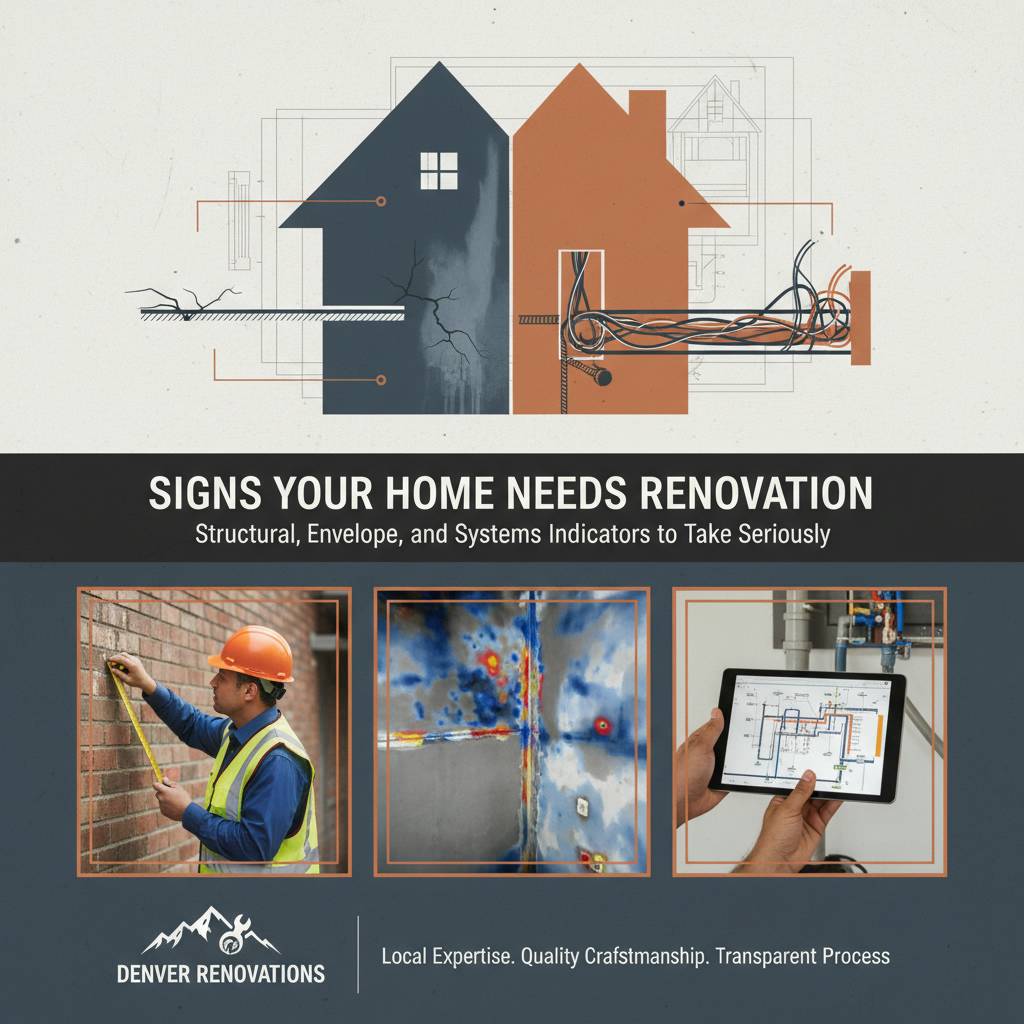 Understanding where a problem originates helps decide whether a cosmetic fix will do or a renovation is necessary. Structural issues often manifest slowly and may include hairline cracks that widen, gaps between walls and ceilings, or a sagging roofline. These signs should prompt a focused inspection because left unchecked they can compromise safety and lead to costly remediation.
Foundation and framing
Cracks in foundations, diagonal cracks above doors, or windows that no longer operate smoothly often point to foundation movement or framing shifts. Not all cracks are emergencies, but when you notice widening over months, water intrusion near the foundation, or separating trim, it's a clear sign your home needs renovation attention. Foundation repairs are best planned and executed with an engineer or experienced contractor.
Roof, flashing, and exterior envelope
Missing shingles, recurring leaks after rain, or stains on interior ceilings indicate failures in the roof or flashing and should be treated urgently to avoid widespread water damage. Similarly, deteriorating siding, failed sealants around windows, and blocked gutters all contribute to moisture penetration. Addressing the envelope often prevents interior damage and preserves insulation performance.
Plumbing and moisture problems
Recurring low water pressure, unexplained increases in water bills, or the sound of running water when fixtures are off can signal hidden leaks. Visible signs include discolored ceilings, warped floors, and musty odors that point toward mold. Renovations that expose and correct plumbing defects save money long-term by preventing rot, mold remediation, and structural decay.
Electrical and HVAC systems
If breakers trip frequently, lights flicker, or outlets are warm to the touch, your electrical system may be overloaded or have outdated components. HVAC systems that require constant repairs, produce uneven temperature zones, or are more than 15-20 years old can be both inefficient and unreliable. Replacing and properly sizing electrical and mechanical systems is a renovation decision that improves safety, lowers energy bills, and increases home value.
How Riley Riley Construction assesses and prioritizes renovation needs
Our assessment approach starts with a listening session: we want to know what you notice, how long it's been happening, and what previously attempted fixes existed. Then we conduct a visual and diagnostic inspection, using targeted tools when necessary - moisture meters, thermal imaging, and basic load tests - to map the problem areas and separate cosmetic issues from core failures.
After data collection comes prioritization. We give special attention to safety risks (electrical faults, structural instability), systems that affect habitability (plumbing leaks, HVAC failures), and items that will grow costlier if deferred. The final assessment report outlines immediate actions, medium-term renovations, and longer-term upgrades, with estimated price ranges and expected life extensions for the repaired systems.
Every recommendation emphasizes value: we look for solutions that address root causes, improve energy efficiency, and prevent negative compounding effects. For many homeowners a staged renovation plan - tackling urgent repairs first, then focusing on efficiency and finishes - is the most practical and cost-effective path forward.
Common renovation priorities and typical cost ranges
Home renovations vary greatly by region, materials, and scope, but having a realistic budget range helps you plan. Below is a concise table of common renovation items and typical price ranges to give you a frame of reference. These are ballpark figures meant to inform planning conversations, not fixed quotes.
| Project | Typical cost range | Why it matters |
|---|---|---|
| Minor roof repairs | $300-$1,200 | Stops leaks and prevents interior damage |
| Full roof replacement | $5,000-$25,000 | Extends life of home and improves resale value |
| Foundation repair (spot) | $1,000-$10,000 | Addresses localized movement or settlement |
| Plumbing patches and leak repair | $150-$1,500 | Fixes visible leaks and prevents mold growth |
| Electrical panel upgrade | $800-$3,500 | Improves safety and supports modern load |
| HVAC replacement | $3,000-$12,000 | Increases comfort and energy efficiency |
| Kitchen remodel (mid-range) | $15,000-$50,000 | High ROI and improved daily function |
| Bathroom remodel (mid-range) | $8,000-$25,000 | Fixes moisture issues and updates fixtures |
For smaller tasks like replacing worn weatherstripping, insulating an attic, or swapping out old faucets, expect costs in the $75-$200 range for many parts and labor items. These low-cost, high-impact measures often pay back through lower energy bills and improved comfort.
How to decide whether to renovate now or defer
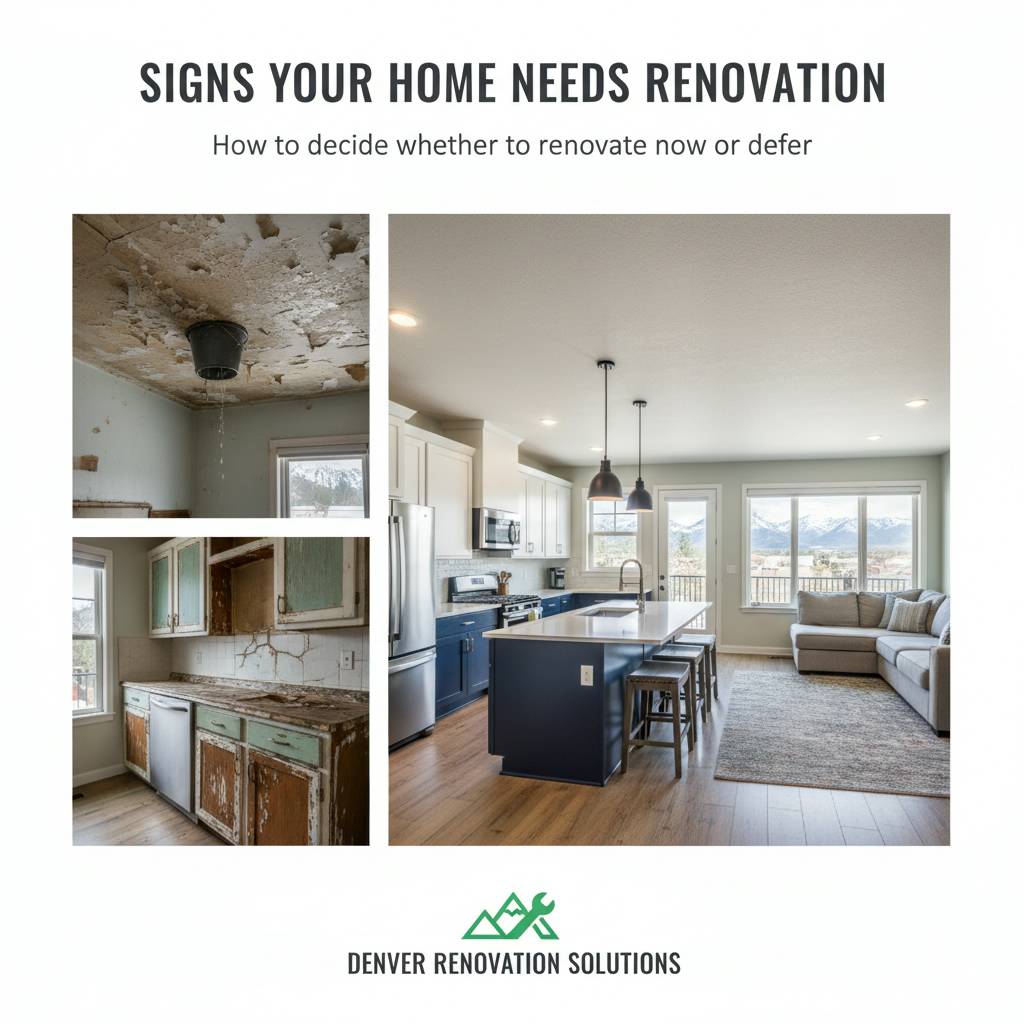 Deciding when to renovate is rarely binary. Consider three lenses: safety, cost escalation, and lifestyle impact. If a condition threatens safety (exposed wiring, severe mold, structural cracking), act immediately. If a defect will worsen quickly and become more expensive if deferred, prioritize it next. Projects that are primarily cosmetic can wait until budgets allow.
Another useful approach is staging: address immediate safety and systems first, then plan upgrades that enhance energy efficiency and functionality, and schedule cosmetic finishes last. This staged method keeps your home livable and spreads costs over time while still preventing escalation of major issues.
Practical steps homeowners can take right away
Before a professional visit, you can do simple checks to document problems: take dated photos of cracks, take pictures after bad weather to capture leaks, record your energy and water bills, and note when malfunctions occur. These records make the assessment more accurate and speed up diagnosis.
- Inspect attic and basement for water stains and insulation gaps.
- Check all visible plumbing for leaks and listen for running water when fixtures are off.
- Test doors and windows for smooth operation and air leaks.
- Make a list of sounds, odors, or performance problems with systems like HVAC and electrical.
After gathering this information, share it with your assessor. It saves time, reduces diagnostic guesswork, and helps prioritize repairs that provide the most value and protection for your home investment.
Case study snapshots and frequently asked questions
Case study: A mid-century bungalow showed hairline foundation cracks and a slightly sloped floor. The homeowner called Riley Riley Construction and we performed a structural assessment that identified localized settlement due to poor drainage. A combination of targeted underpinning and corrected grading solved the problem. The total intervention was staged over two months and prevented what could have become a much larger repair if delayed.
FAQ - How quickly should I act if I suspect mold? If you find visible mold or persistent musty odors, address it promptly. Small patches can sometimes be managed with proper PPE and cleaning, but recurring or large infestations require professional evaluation to find the moisture source and remediate safely. Riley Riley Construction includes moisture diagnostics in a full home assessment.
FAQ - Will a renovation increase my insurance premiums? Major renovations can change your home's replacement value, which may affect premiums, but many energy-efficient and safety upgrades can reduce risk and sometimes lower insurance costs. Your carrier can advise on specific impacts after an upgrade is planned.
Final thoughts and next steps
Recognizing signs your home needs renovation is the first step toward protecting your investment and maintaining a safe, comfortable place to live. Small signals often foreshadow larger problems, so an on-time assessment is both practical and cost-effective. Riley Riley Construction combines experienced observation, targeted diagnostics, and clear prioritization so you know which repairs deserve immediate attention and which can be planned.

If you want a straightforward evaluation that highlights urgency and cost-effective solutions, we're ready to help. Early action guided by experts prevents escalating damage and preserves your investment, and our team is experienced at turning observations into a phased plan that fits your needs and budget.
Ready to schedule an assessment or ask a quick question? Call 17209155352 today for a friendly, professional evaluation and clear next steps. For less urgent inquiries, you can also request a consultation and we'll follow up with recommended timing and budget estimates.
Thank you for considering Riley Riley Construction - we look forward to helping you identify and prioritize the right renovations to keep your home safe, efficient, and valuable. Contact us at 17209155352 to get started.