
Licensed Contractor Verification Checklist
A licensed contractor verification checklist is essential to avoid unqualified hires, and Riley Riley Construction provides a step-by-step vetting process
Hiring a contractor is one of the most consequential decisions for any renovation, repair, or construction project. A licensed contractor verification checklist helps homeowners and property managers reduce risk, avoid delays, and ensure professional workmanship. Riley Riley Construction offers a clear, practical process to verify credentials, and we encourage readers to reach out to our team for a personalized review. Contact Riley Riley Construction at 17209155352 to obtain our verified checklist and have an expert confirm contractor credentials before work begins.
When you rely on a systematic verification process you move beyond intuition and recommendations into verifiable facts. This page outlines why verification matters, the documents and checks you should demand, common red flags, cost considerations, and contract best practices. Whether you're managing a small bathroom remodel or a multi-room addition, a focused approach to vetting protects your investment and gives you leverage in negotiations and dispute resolution.
Why verifying a licensed contractor matters
Licensing correlates with minimum competency, compliance with local codes, and an assurance that a contractor is registered to perform the work they propose. While a license alone is not a guarantee of quality, it is a baseline requirement that separates legitimate professionals from unqualified operators. A licensed contractor also typically carries required insurance and follows safety and permitting rules that protect both the homeowner and the broader community.
Beyond legal compliance, verification helps prevent common problems such as unexpected liens, substandard materials, and incomplete work. When you verify credentials before signing a contract, you preserve remedies if problems arise - for example, you can file complaints with state licensing boards, pursue insurance claims, or expedite corrections through bonded work protocols. These avenues are often unavailable when hiring unlicensed or uninsured workers.
Step-by-step licensed contractor verification checklist
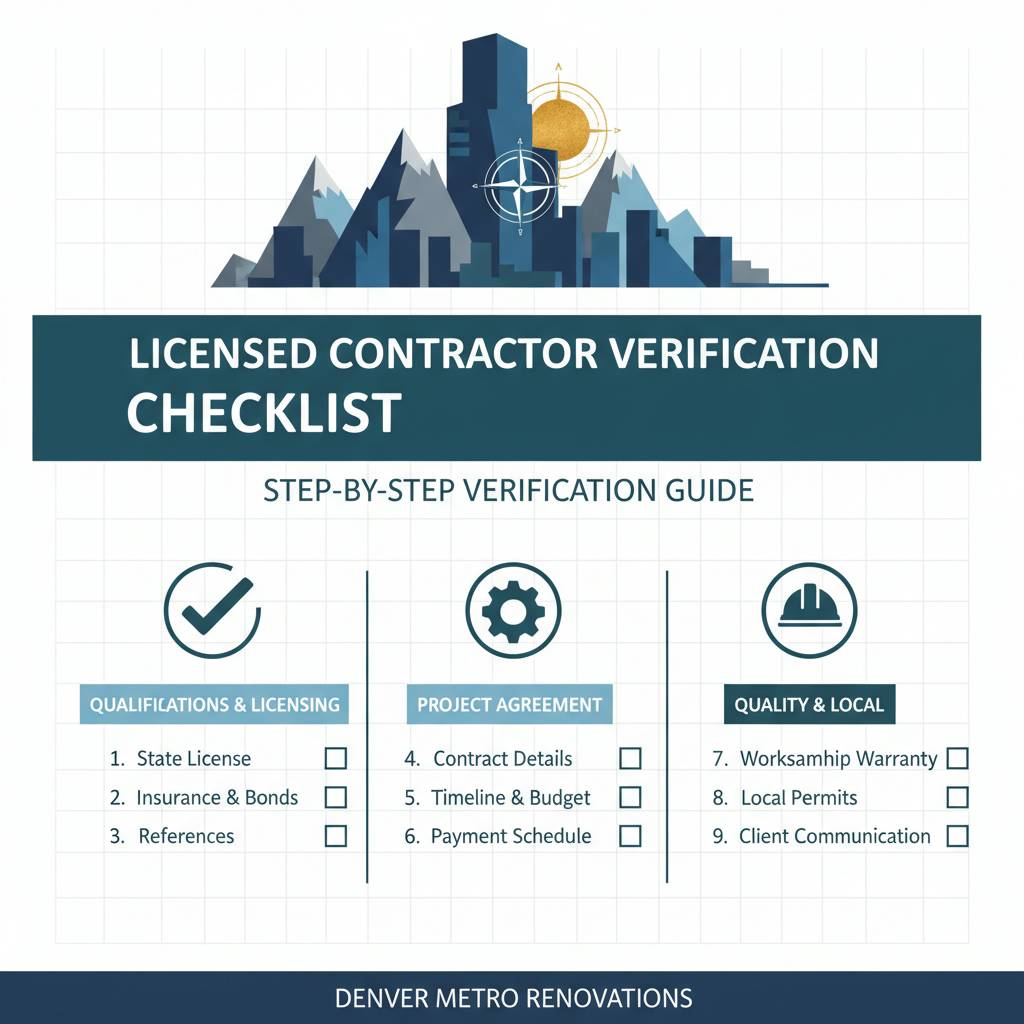 This section is a practical walk-through you can use the moment a contractor bids on your project. Treat it as a sequence: verify identity and license, confirm insurance and bonding, check references and recent work, evaluate contract terms, and inspect permits and code compliance. Each step is designed to be completed in a few minutes to a few days depending on the depth of the project.
1. License verification
Request the contractor's license number and the exact business name used for registration. Look up the license on your state or local licensing board's website to confirm status, classification, expiration date, and any disciplinary history. Confirm that the license category matches the work you need done - for example, general contractor, electrical, plumbing, or specialty trades. If the license lookup shows active disciplinary actions, contact the licensing board to understand the issue before proceeding.
2. Insurance and bonding
Ask for current certificates of insurance for general liability and workers' compensation. Verify effective dates, coverage limits, and whether the policy names you as an additional insured while work is ongoing. If the contractor cannot show workers' compensation or insists you will not be responsible, that is a major red flag. For larger projects, request a surety bond and confirm the bond's value and issuer. Bonds provide an additional remedy if the contractor fails to complete the work or violates contract terms.
- General liability: protects you from property damage or bodily injury claims.
- Workers' compensation: protects you from liability if a worker is injured on your property.
- Surety bond: protects against contractor default or failure to meet contract terms.
3. References and portfolio
Request at least three recent references with completed project descriptions and contact information. Visit or independently verify at least one completed project, if possible. When speaking with references, ask about adherence to schedules, communication, warranty follow-up, and whether the project required additional change orders. References who cannot be reached or who give vague answers should prompt a deeper look at the contractor's work history and online presence.
4. Permits, inspections, and code compliance
Confirm who is responsible for pull permits and scheduling inspections - this responsibility should be explicit in your contract. Check local permit records for the contractor and confirm the inspector's sign-offs on completed work. Unpermitted work can result in costly remediation and complications at resale, so insist on documented permit pulls and final inspection certificates for work that requires them.
5. Contract and payment terms
Obtain a written contract that clearly lists the scope of work, materials, timetable, payment schedule, warranties, and dispute resolution methods. Avoid large upfront payments and insist upon milestone-based payments tied to clear deliverables. Include an itemized materials list and brand names where material quality is important. The contract should also specify cleanup responsibilities and whether subcontractors will be used, including their licensing and insurance status.
Documents to request and verify
Keep a checklist of the exact documents you should obtain from a prospective contractor. Having paper or digital copies of these items protects you and speeds resolution if issues occur. Below is a concise list you can use at initial meetings and prior to signing a contract.
- State or local contractor license documentation and license number
- Certificate of insurance for general liability and workers' compensation
- Surety bond documentation (if applicable)
- Proof of business registration and tax ID (where relevant)
- Written contract with scope, timeline, payment schedule, and warranties
- List of subcontractors and their credentials
- References and photos of recent work
- Copies of permits and inspection approvals
Common red flags and how to respond
Recognizing warning signs early saves time and money. Some red flags are immediate: absence of a license number, refusal to provide insurance certificates, requests for full payment upfront, and pushy sales tactics promising rushed permits or cash-only discounts. Other red flags may be subtler, such as a trail of negative reviews, inconsistent communication, or a lack of verifiable references.
If you encounter red flags, take the following steps: pause negotiations, request additional documentation, verify claims independently with licensing boards and insurers, and consider alternative contractors. For serious concerns like forged documents or unlicensed work, document interactions, avoid paying further funds, and consult local consumer protection or licensing authorities. Your contract should include a clear termination clause for cause that protects you in these circumstances.
Costs, timelines, and realistic expectations
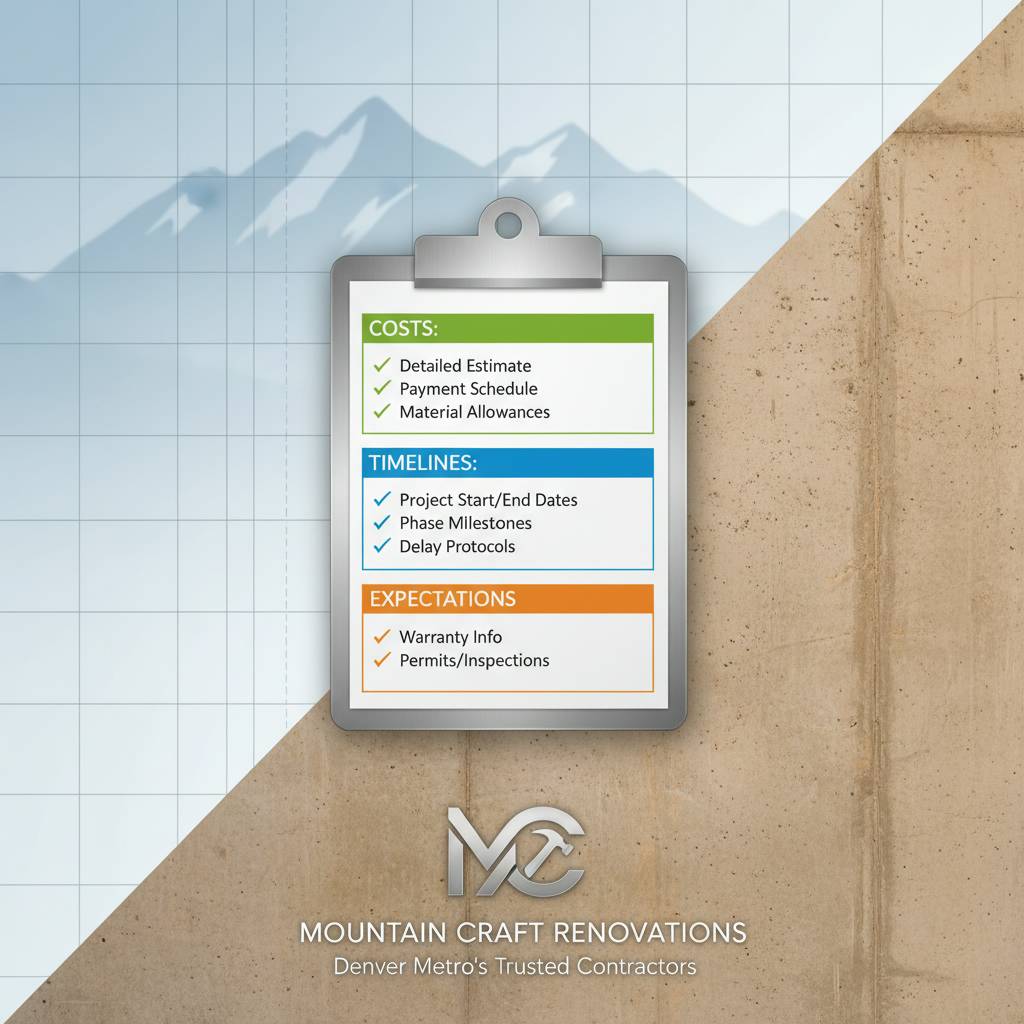 Understanding cost drivers helps you evaluate whether a bid is reasonable. Labor, material quality, permitting, and local market demand all influence price. Low bids sometimes reflect corners being cut; excessively high bids may include contingency buffers or premium materials. Ask contractors to break down labor, materials, permit fees, and approximate timeframes. Typical small inspection or verification services (if you hire a third-party inspector) can range from $75-$200, while more comprehensive pre-hire background checks may cost more depending on scope.
Timelines should be realistic and account for permit lead times and supply constraints. Include reasonable buffer time in your contract for material delays and unexpected site conditions. An experienced contractor will provide a schedule with milestones and explain dependencies; if a contractor is vague about timing, expect disputes later. Keeping communication documented-email confirmations for schedule changes, for example-reduces misunderstandings and supports any later claims.
| Insurance Type | What it Covers | Why it Matters |
|---|---|---|
| General liability | Property damage and third-party injury | Protects homeowner from claims related to contractor negligence |
| Workers' compensation | Injuries to contractor's employees | Prevents injured workers from suing the homeowner |
| Surety bond | Performance and payment protection | Offers financial recourse if contractor fails to perform |
How Riley Riley Construction supports your verification process
Riley Riley Construction provides targeted assistance to make verification straightforward and reliable. Our team can supply a customized licensed contractor verification checklist tailored to your project type and jurisdiction. We review submitted licenses, insurance certificates, and contract language, highlighting gaps and recommending specific contract clauses to protect your interests. When you request our checklist, we can also perform a preliminary credibility check on a contractor so you start negotiations from a position of knowledge.
In addition to document review, Riley Riley Construction can help interpret licensing board records and explain the implications of any disciplinary history. If you prefer more hands-on help, our experts are available to meet with contractors, request missing information, or coordinate third-party inspections. Using a trusted advisor like Riley Riley Construction reduces the likelihood of surprises and ensures you hire contractors who meet professional standards.
Practical tips for the hiring meeting and monitoring work
Face-to-face meetings reveal a lot about a contractor's professionalism. Come prepared with your checklist and ask direct questions about timelines, key personnel, change order procedures, cleanup, and warranty coverage. Take photos of the work site before work begins and maintain a simple daily log of progress and communications. Requiring weekly progress photos and short written status updates keeps both parties aligned and documents project history should disputes arise.
When change orders are proposed, insist they be written and signed with clear price and schedule implications. Monitor subcontractor arrival and verify their credentials as you would the primary contractor. Final payment should be withheld until permits are closed and you have documented completion that meets the contract's specifications. These practical controls protect your financial interest and encourage professional accountability.
Frequently asked questions
What if a contractor is licensed in another state?
Licensing is jurisdiction-specific; a license from another state does not replace your local requirements. For work that impacts structural systems, plumbing, or electricity, hire a contractor licensed in the state or municipality where the work will be performed. If a contractor holds multistate licenses, verify each one independently and ensure they are authorized to do business in your area.
Is a written estimate enough?
An estimate is only a starting point. Always convert a detailed estimate into a binding contract that includes the full scope, materials, schedule, and payment terms. A written estimate without contractual protections leaves you exposed to price increases and ambiguous deliverables. Use the licensed contractor verification checklist to confirm that the estimate aligns with verified credentials and the contractor's documented capacities.
Call to action and next steps
If you are preparing to hire a contractor, take one simple step now: request the licensed contractor verification checklist from Riley Riley Construction. We will provide a clear, jurisdiction-specific list and can review submitted documents to spot issues before you sign. This small investment in due diligence prevents costly mistakes and supports a smoother project from start to finish.
For a confidential review or to receive our checklist, contact Riley Riley Construction at 17209155352. Our team will respond with practical instructions and can schedule a detailed document review at your convenience.
Conclusion
Verifying a contractor's license, insurance, references, and contract terms is not optional; it is essential protection for your project and your financial investment. A licensed contractor verification checklist translates vague promises into verifiable facts and actionable documentation. Riley Riley Construction stands ready to help you vet contractors efficiently and with confidence. Reach out to Riley Riley Construction at 17209155352 to obtain our verified checklist and have an expert review contractor credentials before you commit.