
Renovation Cost Breakdown For Homeowners
Understanding a renovation cost breakdown empowers homeowners to budget accurately and avoid surprises, and Riley Riley Construction offers transparent templates to follow
When planning a renovation, the first and most important step is to understand where every dollar is going. A clear renovation cost breakdown for homeowners turns vague estimates into concrete line items, helping you prioritize work, compare bids, and reduce the risk of unexpected bills. Riley Riley Construction provides transparent templates and guidance so you can see labor, materials, permits, and contingency explained in plain language.
Knowing the typical components also helps you make choices that align with your goals-whether that means preserving character, maximizing resale value, or staying strictly on budget. This guide walks through common line items, contingency planning, and how material and design choices influence the final price. If you prefer, reach out to Riley Riley Construction at 17209155352 for a clear, itemized estimate tailored to your home and goals.
What a thorough renovation cost breakdown includes
A renovation cost breakdown is a line-by-line statement that separates direct construction costs from indirect costs and professional fees. Direct costs are tangible items like flooring, cabinets, fixtures, and labor. Indirect costs include permits, inspections, temporary utilities, and waste removal. Professional fees cover design, engineering, and project management. Presenting these categories separately gives homeowners a complete view of the project budget without hidden cross-subsidies.
Good breakdowns also show unit costs and quantities where relevant (for example, price per square foot of tile or hourly labor rates). This level of detail makes it easier to test "what-if" scenarios-substituting a different countertop material, changing cabinet style, or shifting from a partial to a full kitchen design-so you can see how each decision changes the bottom line.
Typical line items: what to expect and why they matter

Labor
Labor is frequently the single largest line item in a renovation cost breakdown for homeowners. It covers skilled tradespeople-carpenters, electricians, plumbers, tile setters, and painters-and is calculated either by the hour, by trade, or as a percentage of total project cost. Labor rates vary widely by region and skill level; premium finishes and tight schedules can increase labor expenses because they demand more time or specialized expertise.
Materials and finishes
Materials include everything installed or applied during the project: flooring, cabinetry, countertops, appliances, fixtures, and finishes such as paint and trim. Choices here drive cost variability: a basic laminate countertop might cost a few hundred dollars, while a high-end quartz or natural stone slab can run thousands. Manufacturers' warranties, availability, and lead times should also be captured in the estimate because they influence both cost and schedule.
Permits, inspections, and compliance
Permits and inspections are often underestimated by homeowners but are essential to a compliant and safe renovation. Permit fees depend on scope and jurisdiction and may be charged per trade or as a flat project fee. Inspections ensure structural safety, electrical compliance, and proper plumbing. Including these items explicitly in your breakdown avoids surprises and protects long-term property value and resale ability.
- Permit fees and plan review
- Municipal inspection costs
- Code upgrades required by local regulations
- Waste disposal and recycling fees
Contingency planning: how much to set aside and how to use it
Unexpected issues-hidden water damage, outdated wiring, or structural problems-are common once demolition begins. A contingency fund is your financial buffer for those unknowns. For most residential renovations, a typical contingency is 10%-20% of the project budget, though smaller, well-defined projects might manage with 5%-10% while complex structural work may require more. The contingency should be clearly labelled in your cost breakdown so it's not mistaken for discretionary spending.
A best practice is to divide contingency into two parts: a small, dedicated allowance for minor unforeseen matters and a larger reserve for major discoveries that require re-scoping (for example, mold remediation or load-bearing repairs). Document how contingency funds will be approved-who signs off, what thresholds trigger change orders, and how adjustments will be communicated-to keep the project transparent and under control.
How design choices and project scope affect final pricing
Small changes in design or materials can have outsized impacts on cost. Reconfiguring walls, moving plumbing, or changing window openings can increase labor and structural costs considerably. Conversely, keeping existing layouts, matching new work to existing floor heights, and choosing standard-size windows and doors typically lower expenses. It's important to weigh the visual and functional benefits of a change against the cost of implementing it.
Finishes are another major lever. Mid-range cabinetry with durable hardware can achieve an attractive look at moderate cost, whereas custom cabinetry adds significant expense but boosts functionality and uniqueness. When reviewing an estimate, ask for a line-by-line comparison between "good," "better," and "best" options so you can see where spending more has tangible benefits and where it doesn't.
Practical tools and templates to get a transparent estimate
 Riley Riley Construction offers straightforward templates that break projects into standardized line items to make comparisons simple. A well-designed template separates hard costs from soft costs, lists quantities and unit pricing, and highlights any allowances (generic cost estimates for items not fully specified). Use these templates to request bids from multiple contractors so each quote can be read on the same terms.
When evaluating bids, be sure each includes similar detail: scope of work, materials and brands, labor rates, timeline milestones, payment schedule, and warranty terms. If a bid lacks detail, ask the contractor to expand it rather than guessing what's included. Transparency protects you and helps identify gaps-both cost gaps and scope gaps-before work begins.
Sample cost ranges for common renovation projects
The ranges below are illustrative and will vary by region, project complexity, and finishing level. Use them as a starting point for conversations and to help shape your contingency and planning buffers. Always ask your contractor for local, itemized costs to produce an accurate renovation cost breakdown for homeowners tailored to your property.
| Project | Typical Cost Range | Notes |
|---|---|---|
| Full kitchen remodel | $15,000-$75,000 | Depends on cabinetry, appliances, and layout changes |
| Bathroom remodel (mid-range) | $8,000-$25,000 | Includes fixtures, tile, and basic carpentry |
| Basement finishing (per finished sq ft) | $30-$100 | Lower end for basic finishes, higher for full bathrooms and kitchens |
| Interior painting (per room) | $300-$1,500 | Depends on prep work and ceilings |
| Flooring (materials installation) | $5-$25 per sq ft | Laminate at low end, hardwood or tile at higher end |
How to compare quotes and avoid common pitfalls
Comparing quotes requires more than looking at the bottom-line number. Start by ensuring each bid describes the same scope and uses the same allowances for materials. Create a simple comparison matrix that lists scope items down the left side and contractors across the top so you can tick off inclusions and note exclusions. That clarity prevents the common misconception that a low estimate equals a better deal when it may omit important work.
Beware of vague language such as "work as required" or "materials included" without brand or grade. Ask for manufacturer names, model numbers, and warranty details. Ensure the proposal clarifies payment milestones, retainage (if any), and how change orders are handled. Finally, check references and recent project photos to confirm the contractor's workmanship aligns with the level implied by their estimate.
Case study: a typical kitchen renovation and how the numbers add up
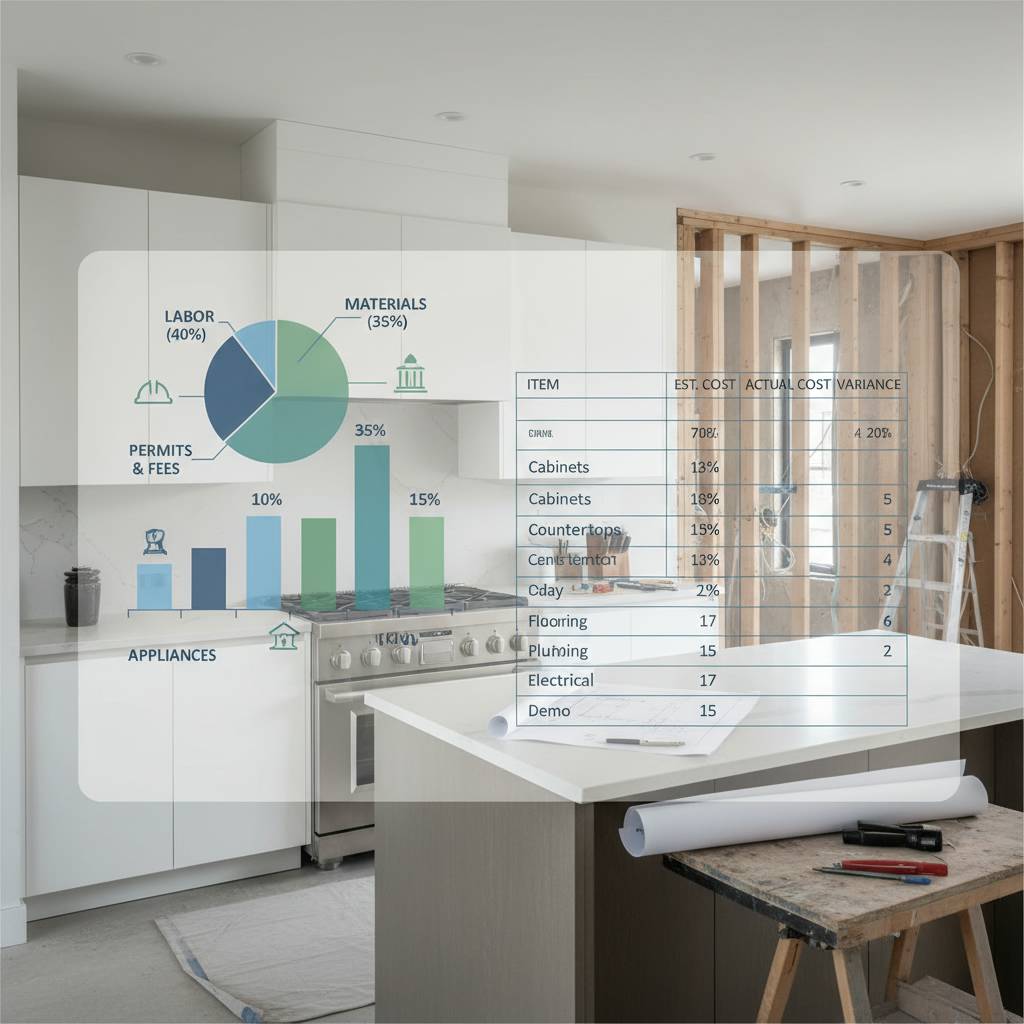 Consider a mid-range kitchen remodel in a suburban home: the homeowner keeps the existing footprint but replaces cabinets, counters, appliances, flooring, and lighting. An itemized breakdown might show cabinetry at $10,000, countertops at $3,000, appliances at $6,000, labor at $8,000, plumbing and electrical at $2,500, and permits and disposal at $1,000. Adding a 12% contingency brings the total to a realistic project budget that accounts for common discoveries during demo.
In this example, the owner saved by keeping the layout intact and selecting semi-custom cabinets rather than full custom. They also negotiated a payment schedule tied to milestones, which reduced cash flow risk and aligned contractor incentives with timely progress. That combination of transparent line items and practical choices reduced surprises and improved satisfaction with the final result.
Frequently asked questions
How detailed should an estimate be?
An estimate should be detailed enough to show quantities, unit prices, and whether allowances are being used. It should also name major brands or provide equivalent descriptions for critical items. The goal is to avoid ambiguity so you can fairly compare quotes. If you see a large contingency or vague allowances, ask for a breakdown or split the contingency into smaller, item-specific allowances.
When should I hire a designer or architect?
If your renovation involves structural changes, major layout shifts, or high-end finishes, hiring a designer or architect early helps define the scope and produce accurate cost estimates. For cosmetic updates, a design consultation may suffice. Professional involvement can reduce costly change orders by identifying conflicts and detailing specifications before demolition.
Final steps to ensure a successful, transparent renovation
Before signing a contract, review the final renovation cost breakdown for homeowners with a focus on completeness and clarity. Confirm the timeline, milestones, and how delays or scope changes will be handled. Keep communication channels open-regular site visits and weekly check-ins help catch issues early. Retain documentation of selections, product warranties, and change orders so you have a complete record for future maintenance or resale.
Riley Riley Construction is committed to helping homeowners avoid surprises through transparent estimates and practical templates. If you'd like assistance creating a detailed line-item budget for your project or want a contractor-ready template, contact our team. Speak with a specialist at 17209155352 to get an itemized estimate tailored to your home and goals.
Call to action
Ready to take the next step? Request a transparent, itemized estimate from Riley Riley Construction and get clarity on costs before you commit. Our templates and specialists make it easier to compare bids and plan for contingencies.
For personalized assistance, reach out to Riley Riley Construction at 17209155352. We'll walk through a renovation cost breakdown for homeowners and help you build a budget that reflects your priorities and protects your investment.