
Hidden Water Damage Detection In Homes
Hidden water damage can silently undermine your home - how Riley Riley Construction finds and fixes it early
Hidden water damage detection in homes starts with a trained eye and the right tools. At Riley Riley Construction, our team blends experience, technology, and careful investigation to reveal problems before they evolve into structural failures or health hazards. Early detection preserves value, reduces repair costs, and protects occupants by stopping mold growth and wood rot before they spread.
When you suspect a leak, unusual odor, or gradual change in indoor comfort, a timely diagnostic inspection is the difference between a simple repair and a major renovation. Our specialists use moisture mapping, thermal imaging, targeted inspections, and other methods to locate concealed issues in walls, floors, ceilings, and crawlspaces. Call us at 17209155352 to arrange a professional assessment tailored to your property.
Why hidden water damage matters: causes and consequences
Water can enter a home through many obvious and unobvious pathways: failed plumbing joints, deteriorated flashings, capillary rise from foundations, poorly sealed windows, and even trapped condensation behind insulation. These pathways are often hidden within assemblies, so visible stains or puddles are only the tip of the problem. Because water migrates along paths of least resistance, it can damage structural framing, create insulation voids, and feed mold in out-of-sight cavities.
Consequences of delayed detection
When left unaddressed, hidden water damage reduces indoor air quality, compromises load-bearing elements, and significantly raises repair costs. Cosmetic fixes like repainting or replacing drywall mask ongoing deterioration when the root cause remains. Over time, homeowners face escalating expenses: wood replacement, mold remediation, electrical repairs, and in severe cases, rebuilding. Early diagnosis limits scope and expense, often transforming a complex job into a manageable repair.
Common causes that hide damage
Knowing where to look narrows the field for effective inspection. Common hidden causes include intermittent plumbing leaks that only occur under pressure, roof leaks that track along rafters before manifesting at a distant ceiling, condensation in unvented attics, and hydrostatic pressure forcing water through foundation cracks. Each cause requires a distinct diagnostic approach to pinpoint the exact source and develop a remediation plan.
Diagnostic techniques used by Riley Riley Construction
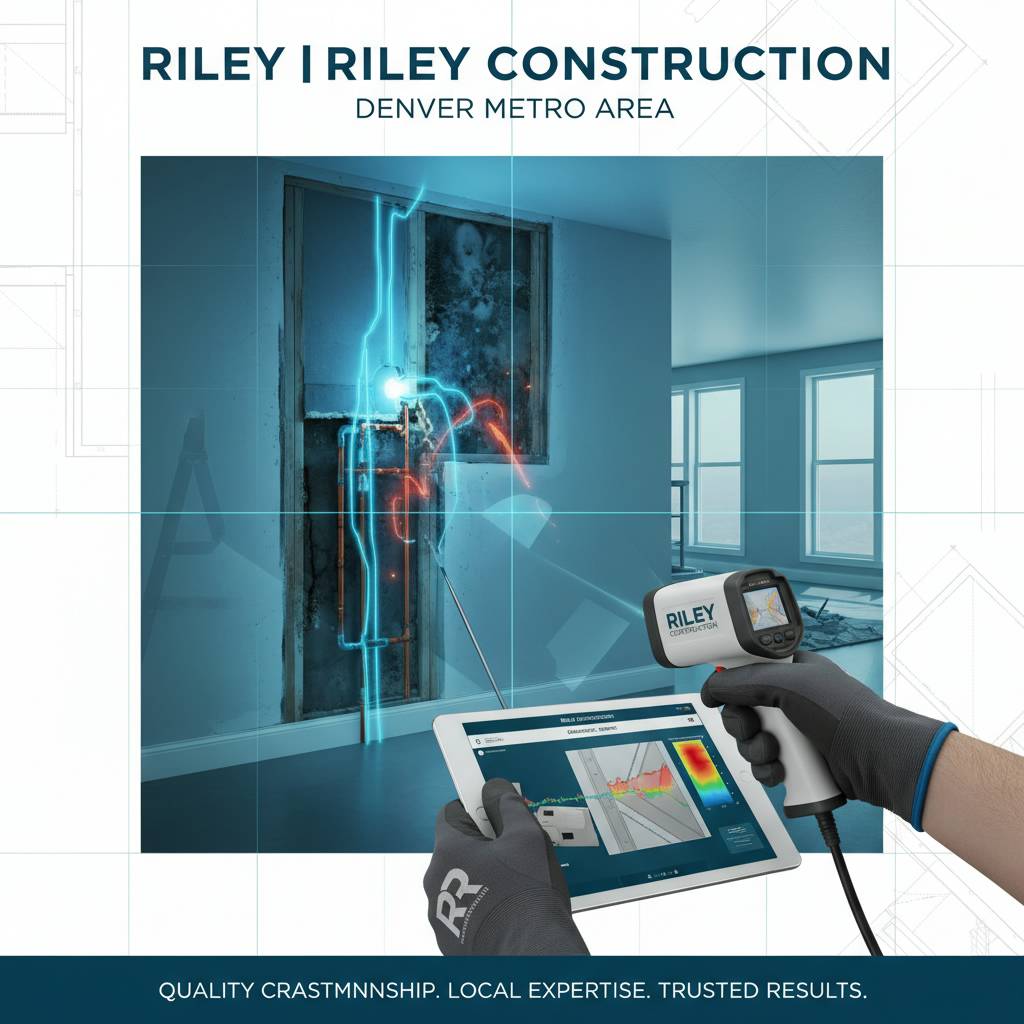 Riley Riley Construction employs a layered approach to hidden water damage detection in homes, combining noninvasive tools with selective invasive verification when necessary. Our standard toolkit includes moisture meters for pinpoint readings, thermal imaging to reveal temperature anomalies consistent with moisture presence, borescopes for cavity inspection, and targeted moisture mapping to document the extent of intrusion. These tools, used skillfully, reveal concealed pockets of moisture without unnecessary demolition.
How each technique contributes
Thermal imaging is excellent for identifying where wet materials are keeping temperatures different from surrounding dry areas, but it is not proof of water by itself. Moisture meters provide quantitative confirmation. Endoscopic cameras let us see behind drywall or under floors. When needed, tracer dyes or controlled water testing can reproduce leak patterns. Together these tools reduce guesswork and guide precise repairs.
| Method | Strength | Best use |
|---|---|---|
| Thermal imaging | Noninvasive, rapid scanning | Locating potential wet zones and hidden leaks |
| Pin and nonpin moisture meters | Accurate moisture percentage readings | Confirming wet materials and mapping extent |
| Borescope inspection | Visual access to cavities | Inspecting behind molding, inside walls, under floors |
| Hygrometers & data loggers | Track humidity trends | Identifying condensation or chronic moisture issues |
| Tracer dye and controlled testing | Confirms flow paths | Plumbing and roof leak source verification |
Not every inspection requires every tool. We tailor the selection to the building type, symptoms, and homeowner priorities. This targeted method minimizes disruption while delivering a clear, defensible diagnosis.
The inspection process: what homeowners should expect
An effective inspection balances thoroughness with minimal disruption. When you schedule an assessment, a trained technician arrives with calibrated instruments and a plan. We begin with a visual survey of suspect areas-ceilings, walls, cabinets, baseboards, attics, crawlspaces, and mechanical closets-looking for stains, efflorescence, peeling paint, or buckled flooring. Those observations direct the next set of measurements and scans.
Next comes systematic moisture mapping. Using moisture meters we measure relevant surfaces and record readings to create a moisture profile of the space. Thermal imaging follows to scan for colder, potentially wet areas. Where warranted, we deploy borescopes to inspect cavities and may use controlled water tests or dye to trace leakage. Each step is documented with photographs and annotated notes so you can see the evidence and understand the recommendations.
The final deliverable is a clear report that explains findings, pinpoints suspected leak sources, and outlines prioritized remediation options. If immediate mitigation is needed-such as temporary drying or containment-we provide interim measures to prevent further damage while repairs are scheduled. Typical initial detection visit fees vary by scope, commonly falling in the $75-$200 range for basic assessments, with more complex diagnostics quoted up front.
Where hidden water damage often hides and what to watch for
Certain zones are more prone to concealed leaks than others. Roof valleys, behind parapet walls, around chimneys, and along flashing junctions frequently channel water into assemblies before any interior signs appear. In bathrooms and kitchens, plumbing fixtures and appliance connections are prime suspects. Foundation walls and sill plates can experience rising damp or groundwater infiltration, especially during heavy rains or after landscape grading changes.
- Attics: condensation, failed roof underlayment, or plumbing vents.
- Bathrooms: grout and tile failures, leaking fixtures, or tub/shower pans.
- Basements and crawlspaces: hydrostatic pressure, poor drainage, or sump pump failure.
- Exterior cladding: failing sealants, stucco cracks, or improper flashing.
- Mechanical spaces: hidden pipe slow leaks, HVAC drip pans, and duct condensation.
Signs that should prompt a diagnostic inspection include persistent odors, unexplained allergy symptoms, warped flooring or baseboards, paint blistering, or cyclical wet spots that appear after rain. Even faint or intermittent signs are worth investigating; small problems can conceal larger failures.
Repair and remediation strategies after detection
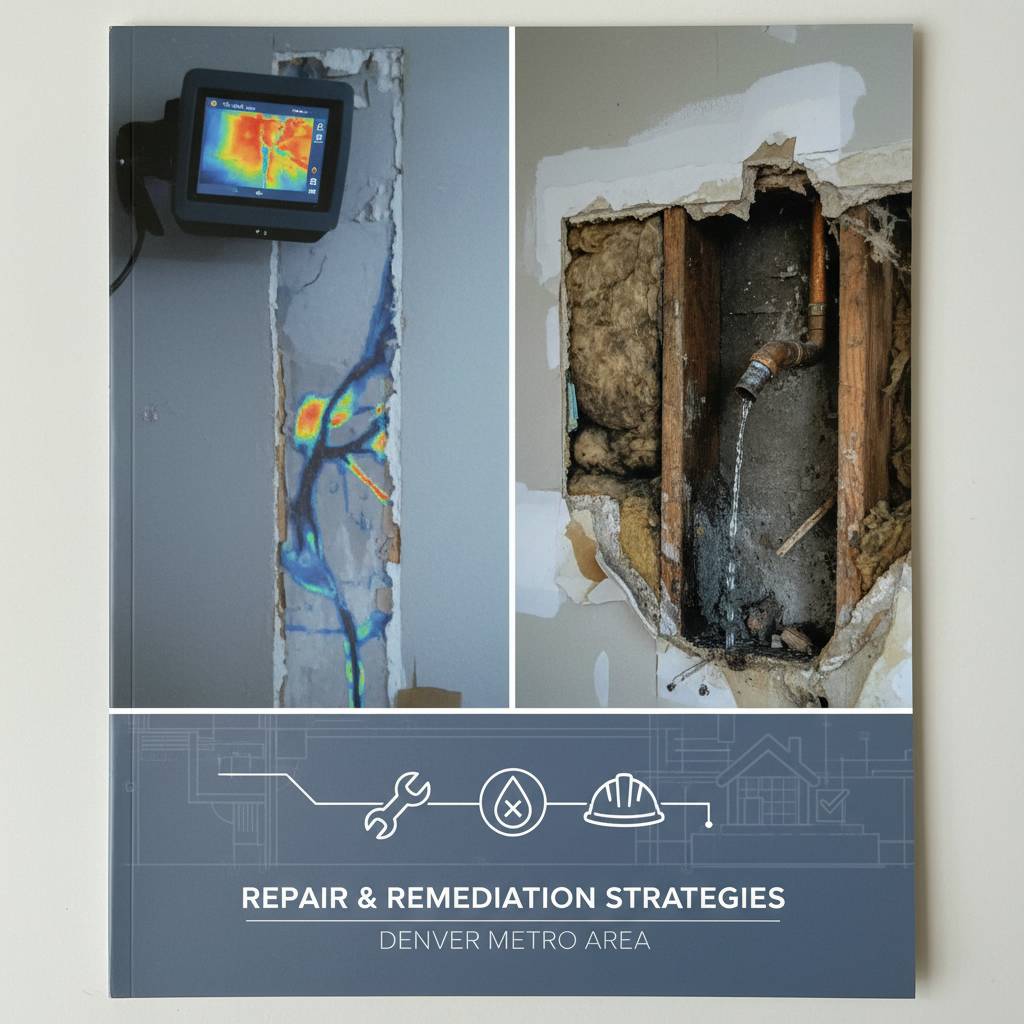 Diagnosis is only the first step. A durable solution addresses the water source, dries and remediates affected materials, and restores assemblies to their intended performance. For plumbing leaks, repairs may range from tightening or replacing fittings to replacing sections of concealed piping behind walls. For roof leaks, flashing and underlayment replacement or targeted shingle repairs may be required. For foundation issues, improving exterior drainage, installing French drains, or applying waterproofing membranes are common interventions.
Mold and moisture-damaged materials require controlled remediation: drying with dehumidification and airflow, removing irreparably affected insulation or sheathing, and remediating mold per industry best practices. Our teams coordinate with licensed contractors when structural repair, electrical work, or major reconstruction is required, ensuring that repairs follow a logical sequence and that newly repaired assemblies are verified dry and stable before closure.
Costs vary with severity. Small leak repairs or targeted remediation may be modest, while full replacement of framing, siding, or floor systems raises the budget substantially. We provide prioritized options so you can weigh immediate safety and long-term value. When prevention is possible-such as improving gutters, grading, or ventilation-we recommend preventative measures that reduce the risk of recurrence.
Frequently asked questions and practical advice
How quickly should I call for an inspection?
If you notice any persistent dampness, odors, or surface changes, it's wise to call sooner rather than later. Rapid assessment limits damage and prevents secondary issues like mold growth. Even if the signs seem small, a professional inspection can save substantial future expense.
Will an inspection require tearing out walls or floors?
Not usually. Most evaluations use noninvasive tools to locate moisture. Targeted, minimally invasive verification-like a small probe hole or borescope port-may be used to confirm findings. Destructive work is reserved for when repairs are necessary and is performed only with your approval and a clear remediation plan.
Can I dry out a wet area myself?
Small surface wetting can sometimes be addressed with fans and dehumidifiers, but concealed moisture requires measurement and verification. Without confirming dryness with meters or data loggers, hidden pockets can remain damp and later foster mold. For persistent or unclear situations, professional drying and monitoring are recommended.
How does Riley Riley Construction document findings?
We deliver an illustrated report with photos, thermal images, moisture readings, and an explanation of the cause and recommended actions. This documentation helps homeowners, insurers, and contractors understand the scope and supports informed decisions about repair and insurance claims.
Real examples and practical steps homeowners can take
One homeowner noticed a faint musty odor on the second floor and called us. Thermal imaging revealed a cool streak along an interior wall; moisture meters confirmed elevated readings in the adjacent studs. A borescope revealed a slow plumbing joint leak inside the wall cavity. Early detection allowed for a targeted repair and limited drywall replacement rather than full wall reconstruction. This reduced cost and disruption substantially.
Practical preventive actions include maintaining gutters and downspouts, keeping landscape soil graded away from the foundation, sealing loose or cracked exterior caulking, and ensuring attic ventilation is adequate to prevent condensation. Regularly inspect areas with plumbing or roof penetrations and schedule a diagnostic check if you observe cyclical wet spots after storms.
Take action now - protect your home and peace of mind
If you suspect hidden water damage or want a proactive check, Riley Riley Construction can provide a timely, thorough evaluation. Our technicians use proven detection methods to locate concealed moisture, document conditions, and recommend durable remediation options that protect your property and occupants.
Contact Riley Riley Construction today to schedule an inspection or to get answers about a specific concern. Call 17209155352 and ask about moisture mapping, thermal imaging scans, or a comprehensive diagnostic package. For quick questions, mention if you've worked with our team before.
Early detection protects your home's integrity and occupant health. Reach out to Riley Riley Construction at 17209155352 to arrange a detection service and prevent escalating repair costs.