
Compare Renovation Materials For Durability
Choosing durable renovation materials extends lifecycle and reduces maintenance
Renovations can feel like a long list of decisions: style, schedule, budget, and materials. When the objective is long-term value, durability becomes the deciding factor. This page helps homeowners compare renovation materials for durability, weighing cost, resilience, and appearance so you can make informed choices that minimize maintenance and extend lifecycle. Riley Riley Construction provides objective comparisons and practical recommendations tailored to your home and lifestyle.
Durability is not a single attribute; it includes resistance to wear, moisture, UV exposure, stains, and impact, plus how easy a surface is to repair. You'll find that the most durable option in one application (for example, exterior siding) may be less suitable for another (like kitchen counters). Read on to see trade-offs for floors, countertops, and exterior finishes, along with lifecycle costs and maintenance realities to help prioritize where to invest.
Flooring: balancing wear resistance, comfort, and longevity
Flooring is one of the most frequently used surfaces in a home, so durability here has outsized influence on long-term cost. High-traffic areas like kitchens, entryways, and hallways benefit from materials that resist abrasion and moisture while still offering comfort and warmth underfoot. When you compare renovation materials for durability in flooring, focus on hardness (resistance to scratches), water tolerance, and repairability.
Common durable flooring options include porcelain tile, engineered hardwood, luxury vinyl plank (LVP), and polished concrete. Each performs differently in cost, lifespan, and maintenance. Porcelain tile resists scratches and moisture exceptionally well and can last decades with minimal care, but grout lines require periodic cleaning. Engineered hardwood offers a warm, natural look and improved stability over solid wood, yet it is more vulnerable to moisture than tile or LVP.
Material highlights and trade-offs
- Porcelain tile: Excellent water and scratch resistance; installation costs vary by style and subfloor prep; tile is cold and can be slippery unless textured.
- Engineered hardwood: Natural appearance with greater dimensional stability than solid hardwood; refinishing options depend on veneer thickness; avoid in consistently damp areas.
- Luxury vinyl plank (LVP): High water resistance, good scratch resistance, and comfortable underfoot; typically more affordable-$2-$7 per sq ft for materials, $5-$12 installed depending on quality.
- Polished concrete: Extremely durable and low maintenance; can be cold and hard, and requires proper sealing to prevent stains; style options are more limited unless customized.
When evaluating cost versus resilience, calculate lifecycle expense rather than just upfront price: consider replacement frequency, refinishing, cleaning, and the home's humidity or pet situation. In a busy family home, the slightly higher cost of an extremely resilient option can yield savings over a decade.
Countertops: surface resilience under daily use
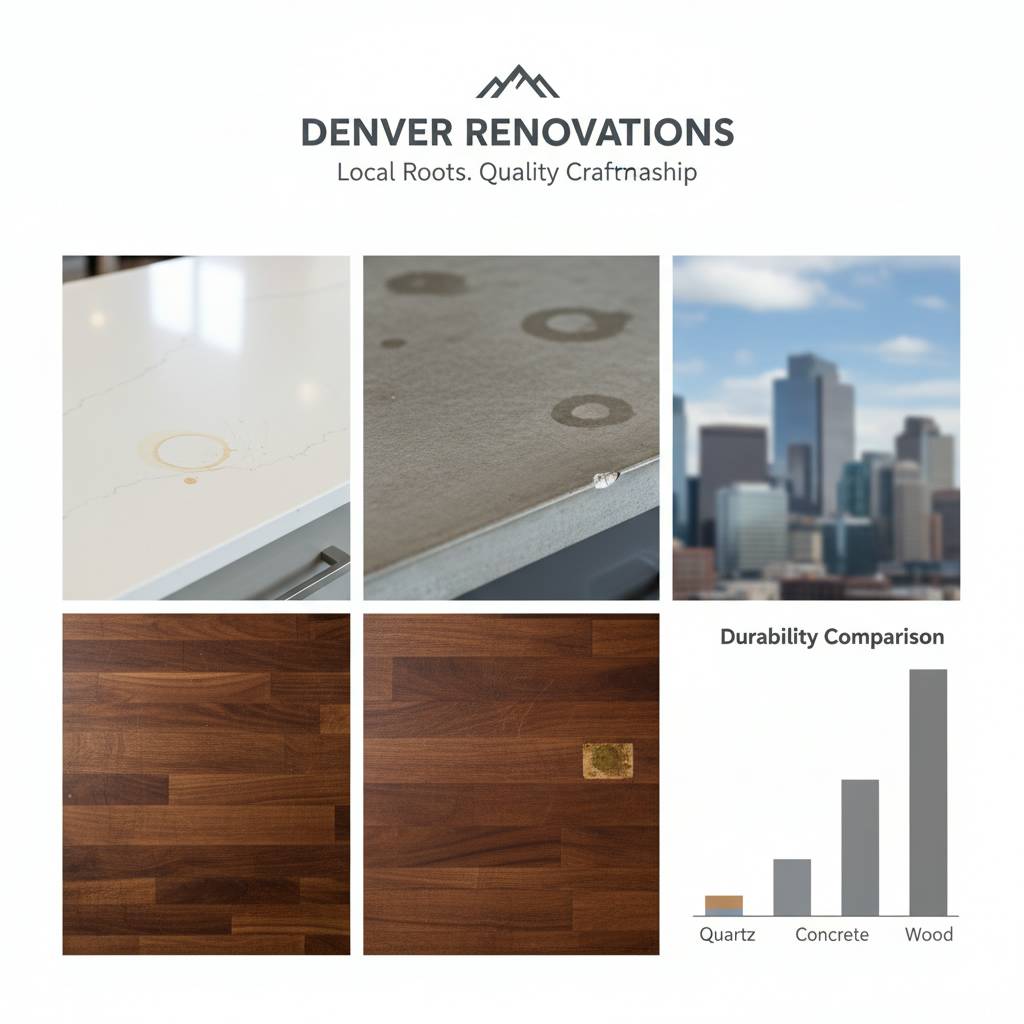 Counters are subjected to heat, knives, spills, and constant use. Selecting countertops with a balance of hardness, stain resistance, and repairability is essential. Popular materials include quartz, granite, solid surface (acrylic), laminate, and stainless steel. Each choice reflects a different compromise between appearance, maintenance, and endurance.
Quartz (engineered stone) has become a go-to for durability: it's non-porous, resists staining better than natural stone, and requires virtually no sealing. Granite offers a natural stone aesthetic and high heat tolerance but is porous unless sealed regularly. Laminate provides an economical and increasingly convincing aesthetic, though it is less scratch- and heat-resistant. Stainless steel and solid surface materials are durable in commercial-style kitchens, with stainless steel prized for heat resistance and sanitation but prone to dents and fine scratches.
Typical costs and practical considerations
- Quartz: $75-$200 per sq ft installed; very low maintenance, excellent scratch and stain resistance.
- Granite: $50-$150 per sq ft installed; natural look with variable porosity-expects periodic sealing.
- Solid surface (e.g., Corian): $45-$110 per sq ft installed; repairable surface and seamless appearance but softer than quartz.
- Laminate: $20-$50 per sq ft installed; cost-effective, limited heat resistance, difficult to repair if damaged.
For active kitchens, prioritize non-porous surfaces that resist food stains and bacteria. If you value a natural stone look but need low maintenance, select a low-variation quartz with a finish that conceals minor wear. For homeowners who enjoy occasional refinishing, solid surfaces provide a middle ground where scratches can be buffed out professionally.
Exterior finishes: weather resistance and long-term performance
Exterior materials must withstand UV, moisture, freeze-thaw cycles, and biological growth like mold or rot. Durability here directly affects thermal performance, maintenance frequency, and curb appeal. Common exterior finishes include fiber-cement siding, vinyl, wood (cedar or redwood), brick/stone veneer, and stucco. Choosing among these should factor in local climate, wind exposure, and maintenance willingness.
Fiber-cement siding is often recommended for its resistance to rot, termites, and fire, and it accepts paint well. Vinyl siding is low maintenance and cost-effective but can warp under extreme heat or impact. Wood offers classic beauty and excellent longevity if maintained-regular staining or painting and attention to flashing are essential. Brick and stone veneers are highly durable and nearly maintenance-free but contribute substantially to upfront cost.
Durability checklist for exterior choices
- Resistance to moisture and rot
- UV and colorfastness over time
- Fire resistance (where local codes or wildfire risk matter)
- Impact resistance and repairability
- Long-term maintenance needs like repainting, power washing, or sealing
Consider lifecycle costs: vinyl may be cheaper initially but can become costly if frequent repairs are required in harsh climates. Conversely, durable options such as stone or fiber-cement often yield lower maintenance costs and fewer replacements over 20-30 years.
Comparing materials objectively: a decision framework
To compare renovation materials for durability in a clear, repeatable way, follow a framework that weighs three primary factors: upfront cost, expected lifespan (with realistic maintenance), and performance in the specific environment of use. Add subjective but important criteria such as aesthetics and resale preference to align choices with personal and market values.
A simple scoring approach can help: assign 1-5 values for cost (affordability), durability (resistance and lifespan), and maintenance burden. Multiply durability by the expected years of use to estimate a lifecycle score, then factor in appearance and repairability. This quantifies trade-offs and surfaces options that provide the best long-term value rather than just lowest initial price.
| Application | High-durability option | Pros | Cons |
|---|---|---|---|
| High-traffic flooring | Porcelain tile / LVP | Water and scratch resistance, long lifespan | Tile can be cold; LVP varies by wear layer |
| Kitchen counters | Quartz | Non-porous, low maintenance | Upfront cost higher than laminate |
| Exterior cladding | Fiber-cement / Brick | Durable, low rot risk | Higher initial cost and installation skill required |
Finally, always verify manufacturer warranties and installation best practices. A high-quality material installed incorrectly will underperform; conversely, competent installation can extend the performance of many materials. When in doubt, request sample installations or visit recent projects completed by your contractor.
Maintenance, repairability, and lifecycle cost examples
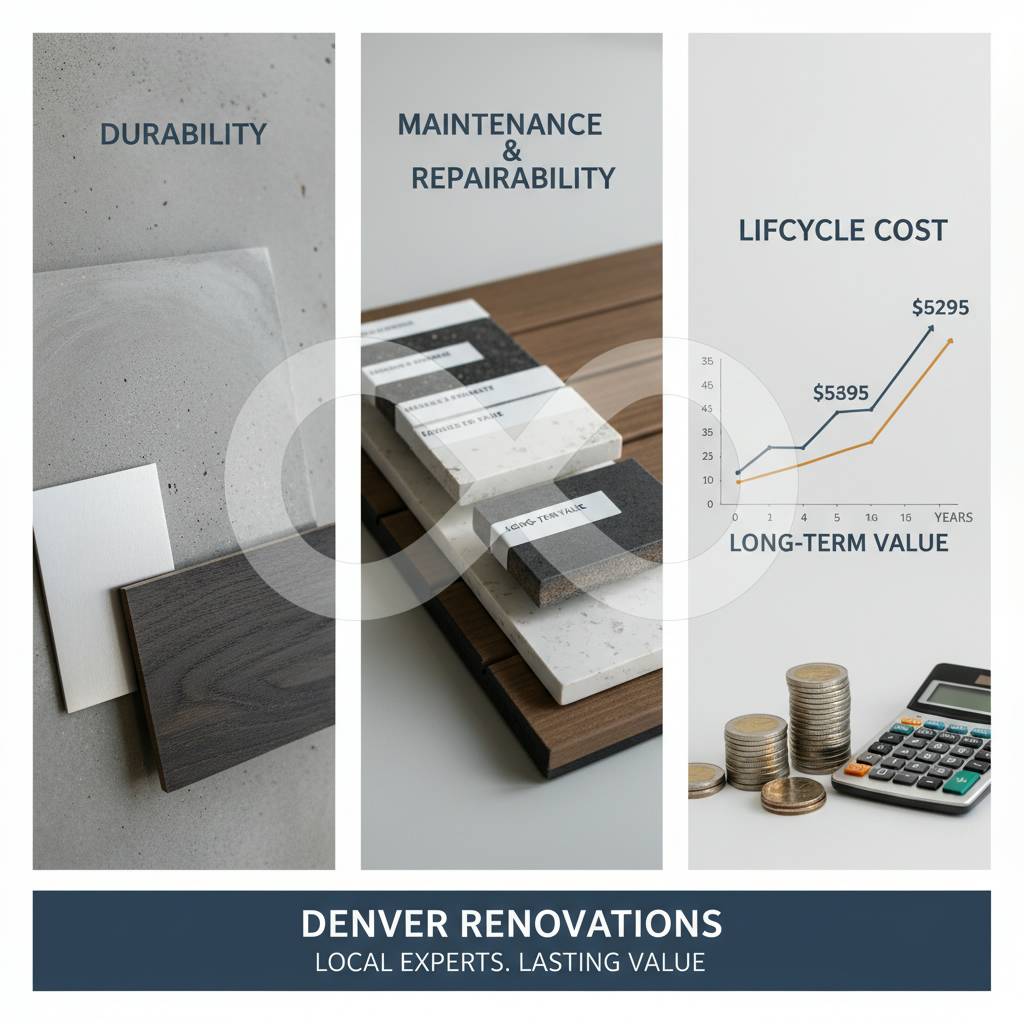 Durability is only part of the equation-maintenance frequency and ease of repair influence total cost. For instance, hardwood floors can be refinished multiple times, extending usable life dramatically if you keep up with preventive care. Quartz countertops resist stains and rarely need professional repair, while a deep scratch in stainless steel or laminate may be costly to conceal.
Estimate lifecycle costs over 15-20 years to compare real expense. Include periodic sealing, refinishing, cleaning labor, and partial replacements. For example, high-end LVP may cost more upfront than low-tier laminate but will likely avoid replacement for the entire period, making it less expensive in the long run. Small homeowners with limited maintenance time often benefit most from materials with minimal upkeep needs.
Quick maintenance examples
- Porcelain tile: Regular sweeping and occasional grout cleaning; reseal grout periodically.
- Engineered hardwood: Maintain humidity levels, refinish when wear is visible; avoid standing water.
- Fiber-cement siding: Repaint every 15-20 years depending on exposure; wash periodically.
- Quartz counters: Wipe spills promptly; no sealing required; treat thermal shocks cautiously.
Real-world case studies and practical recommendations
Case 1: A family with young children prioritized easy cleanup and scratch resistance. They selected LVP for main living areas and quartz in the kitchen. The result was a lower maintenance routine and fewer cosmetic repairs after three active years compared to a previous home with hardwood and laminate.
Case 2: A homeowner in a coastal climate chose fiber-cement siding with stainless-steel flashing and a composite deck with hidden fasteners. The upfront investment was higher, but salt-air corrosion and moisture intrusion were minimized, reducing frequent repair cycles and preserving resale value.
Recommendation summary: For busy households, prioritize surfaces that are non-porous and scratch-resistant. For homes in demanding climates, choose materials rated for UV and moisture exposure. And for budget-conscious projects, allocate more to the areas that see the most daily wear-for example, floors and kitchen counters-while using cost-effective options in low-traffic spaces.
Frequently asked questions
How do I compare materials for my specific climate?
Start by identifying moisture, temperature swings, and UV exposure where the material will be installed. For humid or coastal climates, favor non-porous, rot-resistant materials like fiber-cement, porcelain, or certain composites. For very dry, sun-exposed locations, choose UV-stable finishes and consider impact resistance for windy conditions.
Is it better to spend more upfront on materials?
Often yes, when higher upfront cost reduces replacement and maintenance cycles. However, consider whether the aesthetic or functional benefits justify the expense. Use lifecycle estimates to compare total expected costs over 10-20 years rather than only initial outlay.
Can durable materials still look attractive?
Absolutely. Advances in manufacturing produce highly realistic wood grains, natural stone visuals in engineered materials, and textured finishes for siding and flooring. Durable options now cover a wide range of aesthetics without forcing compromises on performance.
Next steps and expert review
If you want a targeted comparison for your project, Riley Riley Construction can review your plans, suggest the best materials for each application, and provide a cost-versus-longevity analysis. We balance objective durability criteria with aesthetic goals so homeowners make choices that preserve value and reduce long-term maintenance.
Call Riley Riley Construction at 17209155352 to schedule a material review or to request sample boards and warranty comparisons. A brief consultation can prevent costly mistakes and clarify which trade-offs are most sensible for your home and budget.
Ready to compare renovation materials for durability? Contact Riley Riley Construction today-our experts will walk you through options for floors, counters, and exterior finishes and provide clear recommendations based on performance, cost, and appearance. Call 17209155352 to get started.